
Bulbous Nose Rhinoplasty
Key points to remember:
- Bulbous nose rhinoplasty reshapes an enlarged or rounded nasal tip.
- Surgery focuses on refining cartilage while keeping structural support intact.
- Patients with thick skin need specialized techniques and extra patience.
- Final results appear gradually as swelling resolves, often over 12 months or more.
- Every plan is built around your unique facial anatomy, not a one-size-fits-all template.
The surgical team led by Dr. Omar Fouda Neel creates individualized treatment plans based on each patient’s skin type, cartilage shape, and facial balance.
What is a Bulbous Nose?
A bulbous nose is a nose with a rounded, wide, or “puffy” tip that lacks clear definition. Instead of a soft point, the tip looks like a small ball. The problem is almost always at the nasal tip, not the bridge.
Several features combine to create this look:
- Lower lateral cartilages: These paired cartilages form the shape of the tip. When they are broad, convex, or widely spaced, the tip appears round and wide.
- Thick skin: A thick, oily (sebaceous) skin layer hides the cartilage underneath. Even well-shaped cartilage can look blunt under heavy skin.
- Genetics: The shape of your tip is usually inherited. If a bulbous tip runs in your family, yours likely came from the same source.
- Ethnic anatomy: Some ethnic backgrounds are more likely to have thicker skin and wider tip cartilage. This is normal and healthy; it simply changes the surgical approach.
Bulbous Nose vs Normal Nose
Feature | Bulbous Nose | Well-Defined Nose |
Tip shape | Round, wide, “ball-like” | Soft, defined point |
Tip cartilage | Broad or spread apart | Narrow, close together |
Skin thickness | Often thick and oily | Usually thin to medium |
Light reflection | Flat, spread out | Clear highlight on the tip |
Overall balance | Tip dominates the nose | Tip fits the whole face |
What is Bulbous Nose Rhinoplasty?
Bulbous nose rhinoplasty is a focused type of rhinoplasty that reshapes the tip of the nose. The goal is a tip that looks refined and natural while staying strong enough to breathe well and hold its shape for life, which is why Dr. Fouda may also assess whether chin augmentation would further improve the overall nasal-facial balance.
The surgeon may:
- Reshape or reposition the tip cartilage.
- Add small support grafts made from your own cartilage.
- Narrow a wide tip using precise stitches.
- Thin thick skin in select cases.
The improvements can be cosmetic, functional, or both. A cosmetic goal is a more balanced, defined tip. A functional goal is easier breathing, which is where techniques like septoplasty or functional rhinoplasty may be combined with tip work. Good tip surgery improves the look without weakening the airway.
Who is a good candidate for Bulbous Nose Rhinoplasty?
You may be a good candidate if you have one or more of the following:
- A rounded or wide nasal tip that bothers you.
- Thick skin that hides the shape of your tip.
- A tip that looks the same whether you smile or rest.
- A previous rhinoplasty that left the tip round or under-refined (a revision case).
- Good overall health and no active nasal infections, the same baseline required for a facelift surgery to proceed safely
Male patients are common candidates. Many men want a cleaner tip while keeping a strong, masculine nose, not a smaller or feminine one.
The most important trait, though, is realistic expectations. Surgery can make a meaningful, natural improvement. It cannot give thick skin the sharp definition of thin skin. A candid consultation with experienced plastic surgeon Dr. Omar Fouda Neel helps set the right goals from the start.
Why does a Bulbous Nose develop?
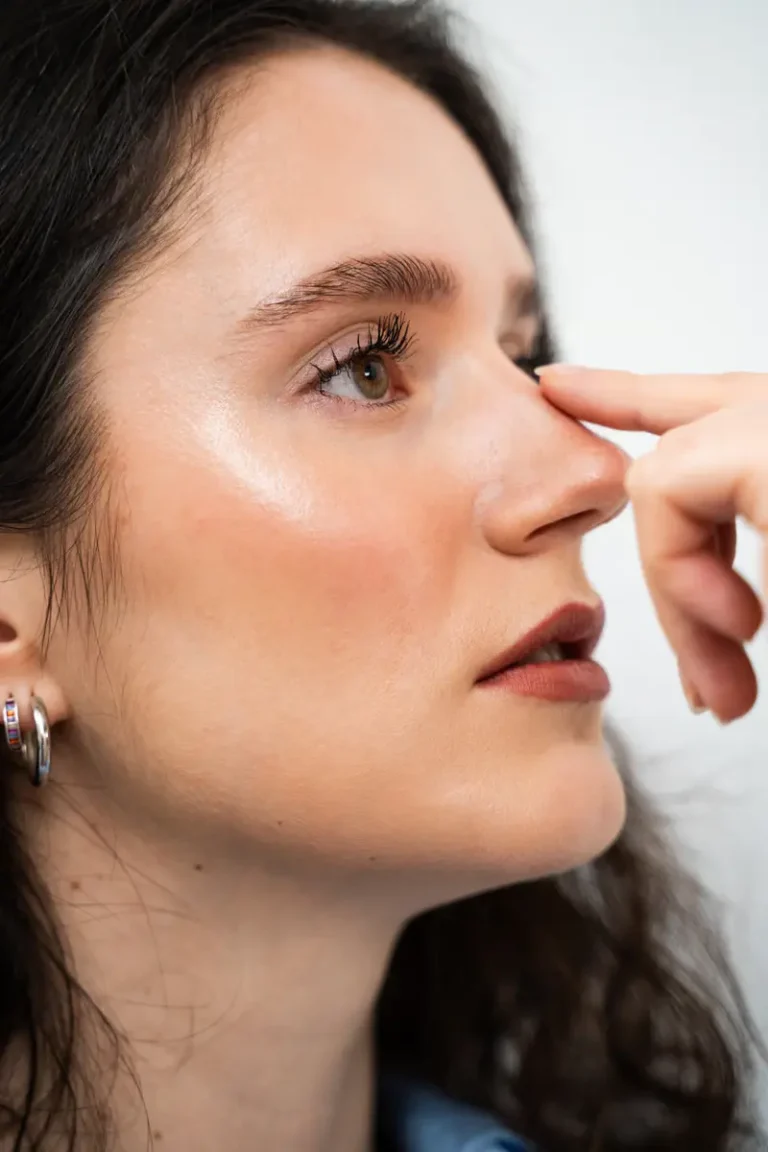
A bulbous tip is not caused by anything you did. It is usually built into your anatomy from birth. The main reasons are:
- Genetics: The single biggest factor. You inherit your tip shape.
- Cartilage shape: Wide, curved, or splayed lower lateral cartilages create a round tip.
- Skin thickness: Thick skin adds bulk and softens definition.
- Sebaceous skin: Oily, pore-heavy skin (often around the tip) tends to be thicker and heavier. Skin tightening can be used to improve skin quality and sebaceous activity before or after surgical tip refinement.
Because the cause is structural, creams, exercises, and massage cannot fix a truly bulbous tip. Surgery is the only reliable way to change the underlying cartilage.
How Bulbous Nose Rhinoplasty is performed?
The surgery is done under general anesthesia and usually takes two to three hours. There are two main approaches.
Open vs Closed Rhinoplasty
Feature | Open Rhinoplasty | Closed Rhinoplasty |
Incision | Tiny cut across the columella (between the nostrils) | All cuts hidden inside the nose |
Visibility for the surgeon | Excellent, full view of tip cartilage | Limited |
Best for | Complex tip work, grafting, and revisions | Simpler, minor tip changes |
External scar | Very small, fades well | None visible |
Precision on the tip | Very high | Moderate |
For most bulbous tips, especially thick-skinned and revision cases, surgeons often prefer the open approach because it gives the clearest view for precise reshaping.
Inside the operation, the surgeon may use several techniques together:
- Cartilage reshaping: Gently trimming the lower lateral cartilage to reduce width while maintaining support.
- Tip sutures: These are small stitches that bring the domes together and improve the tip. This is the mainstay of current tip surgery.
- Cartilage grafting: Small pieces of your own cartilage (from the septum or, if necessary, the ear) are used to produce definition and projection, such as a columellar strut or tip graft.
- Structural support: Reinforcing the structure to ensure the tip remains defined and the nose breathes properly for years.
The modern philosophy is to reshape and support, not simply cut away tissue. Over-removing cartilage is a leading cause of problems that later need revision rhinoplasty.
Rhinoplasty for thick Bulbous Nose
Thick skin is the single biggest factor in how a bulbous tip heals. It is important to understand this before surgery, especially if you’re concerned about a bulbous nose after rhinoplasty.
- Skin redraping: After the cartilage is refined, the skin must shrink and settle over the new shape. Thick skin does this slowly and less completely than thin skin.
- Long-term swelling: Fluid collects above the tip (the “supratip”) and can stay for many months.
- Expected refinement: Results are real but more subtle. A skilled surgeon builds strong tip support so the cartilage can “push out” against the heavy skin.
Some surgeons carefully thin the deep layer of thick skin and may use small steroid injections after surgery to reduce stubborn swelling. Patience is essential, thick-skin results can take 18 months or longer to fully show.
Thick skin vs thin skin outcomes
Factor | Thick Skin | Thin Skin |
Definition possible | Moderate, softer | Sharp, crisp |
Swelling duration | Long (12–24 months) | Shorter (6–12 months) |
Risk of visible bumps | Low (skin hides them) | Higher |
Support grafts needed | Often more | Often fewer |
Patience required | High | Moderate |
Wide nose thick skin Bulbous Tip Rhinoplasty
Some patients have a wide nose, thick skin, and a bulbous tip altogether. This combination needs a careful, layered plan.
- Wide tip correction: Tip sutures and cartilage reshaping narrow the rounded tip.
- Alar refinement: If the nostrils flare too wide, an alar base reduction can narrow the base for balance. In patients with lower face fullness, facial liposuction may also be considered to improve the overall nasal-facial proportion.
- Tip narrowing: The domes are brought closer to create a cleaner point.
- Preserving airflow: Every narrowing step is balanced against breathing. The airway is never sacrificed for looks.
For patients whose width is tied to their heritage, an ethnic rhinoplasty approach respects natural features while improving definition.
Male Bulbous Nose Rhinoplasty
Men and women often want different results, so the surgical plan differs, too.
Male vs Female Rhinoplasty Goals
Goal | Male Patients | Female Patients |
Bridge (dorsum) | Strong, straight | Straight or slightly soft |
Tip rotation | Less upturned | Slightly more upturned is common |
Tip refinement | Cleaner, but still robust | More delicate |
Overall look | Masculine, natural | Feminine, natural |
For male bulbous nose rhinoplasty, the aim is a defined tip that still looks masculine. The surgeon avoids over-refining the tip, maintains a strong bridge, and limits tip elevation to prevent the nose from looking “done.” A natural male result should look like a better version of the same nose.
Bulbous Nose Rhinoplasty before and after
Before-and-after results should be viewed with the right mindset.
- Expected improvements: A more defined tip, a narrower shape, and better balance with the rest of the face.
- Realistic expectations: Improvement is measured against your starting anatomy and skin. Two people can have great results that look quite different.
- Timeline: Early photos still show swelling. The most accurate “after” is taken at least a year post-surgery, and longer for thick skin.
When you review bulbous nose rhinoplasty before and after photos, look for cases with a skin type and starting shape similar to yours. That gives the most honest preview.
Bulbous Nose Tip after Rhinoplasty
It is completely normal for the bulbous nose tip after rhinoplasty to look swollen and even slightly rounded in the early weeks. Here is why:
- Swelling: The tip holds fluid longest of any part of the nose.
- Scar tissue: Healing tissue forms under the skin and slowly remodels.
- Healing phases: Definition returns in stages, not all at once.
Do not judge your tip in the first few months. What you see early is swelling, not your final shape.
Bulbous tip and upturned nose After Rhinoplasty
Many patients notice a bulbous tip and upturned nose after rhinoplasty in the first weeks. This is expected.
- Temporary tip elevation: Swelling in the upper nose can push the tip up, making it look over-rotated.
- Tip settling: As swelling subsides, the tip gradually returns to its natural position.
- When the ultimate shape appears: The true angle is normally visible by 6 to 12 months, and then in thick skin.
An early upturned look is not a mistake; it is a normal stage of healing.
Bulbous Nose Rhinoplasty recovery
Recovery is gradual. Most patients return to work and social life within one to two weeks, but full healing takes much longer.
Recovery timeline
Time After Surgery | What to Expect |
First week | Splint or cast on the nose; bruising and swelling; rest at home |
First month | Splint removed around day 7; major swelling and bruising fade; back to light routine |
3 months | About 70–80% of swelling gone; tip still refining |
6 months | Shape looks much more natural; subtle changes continue |
12 months | Close to the final result for most patients |
18–24 months | Final result in thick-skinned patients |
Bulbous Nose Rhinoplasty results
Long-term results from bulbous nose rhinoplasty are stable and lasting when the tip is properly supported.
Factors that affect your final result include:
- Skin thickness: the biggest influence on definition.
- Surgeon’s technique and experience.
- Cartilage strength and how well it is supported.
- Aftercare: following instructions and attending follow-ups.
- Healing biology: everybody scars a little differently.
The bulbous nose rhinoplasty results you keep for life are shaped as much by planning and aftercare as by the surgery itself. Personalized rhinoplasty care from Dr. Omar Fouda Neel focuses on durable, natural outcomes rather than dramatic short-term change.
Bulbous Nose Rhinoplasty cost
The bulbous nose rhinoplasty cost varies widely and depends on several factors. Cheaper is rarely better for something this precise.
Cost factors table
Factor | How It Affects Cost |
Surgeon expertise | Highly experienced tip specialists cost more |
Case complexity | Thick skin, wide tips, and grafting take more time |
Revision surgery | Revisions are more complex and usually cost more |
Anesthesia and facility | Accredited surgical centers add to the total |
Geographic location | Prices differ by city and country |
Ask for a clear, written quote after your consultation so you understand exactly what is included. Patients not yet ready for surgery can discuss facial fillers as a temporary, lower-cost alternative during the same appointment.
Risks and possible complications
Rhinoplasty is generally safe, but every surgery carries some risk. Knowing them helps you make an informed choice.
Risks & complications table
Risk | Notes |
Bleeding | Usually minor; more common in the first days |
Infection | Uncommon; treated with antibiotics if it occurs |
Asymmetry | Small differences can happen and may need a touch-up |
Prolonged swelling | Especially in thick skin |
Breathing changes | Rare with careful, support-focused technique |
Need for revision | A small percentage may want or need revision rhinoplasty |
Anesthesia risks | Standard general-anesthesia risks apply |
Choosing a qualified, experienced surgeon is the best way to lower these risks.
How to improve Recovery
Follow this simple checklist to heal well:
- Keep your head elevated, even while sleeping, for the first two weeks.
- Use cold compresses around (not on) the nose as advised.
- Take all medications exactly as prescribed.
- Avoid heavy exercise for three to six weeks.
- Stay out of direct sun and wear SPF once cleared.
- Do not blow your nose until your surgeon says it is safe.
- Skip glasses that rest on the nose until approved.
- Attend every follow-up appointment.
- Be patient, swelling is normal and fades slowly.
Do’s & don’ts after Bublbous Tip Rhinoplasty surgery
Do | Don’t |
Rest and sleep upright | Bend over or lift heavy items |
Eat soft, healthy food | Smoke or drink alcohol |
Keep the splint dry | Touch or press the tip |
Follow wound-care steps | Wear glasses on your nose |
Ask questions early | Judge your result too soon |
When should you contact your nose surgeon?
Call your surgeon promptly if you notice:
- Heavy or non-stop bleeding.
- A fever or spreading redness (signs of infection).
- Severe or worsening pain not helped by medication.
- Sudden, one-sided swelling.
- Any symptom that worries you.
When in doubt, reach out. Your surgical team would always rather hear from you early.
Myth vs Fact
Myth | Fact |
“A bulbous tip can be fixed with exercises or massage.” | Only surgery changes the underlying cartilage. |
“Thick skin can’t be improved.” | It can, results are just softer and slower to appear. |
“You’ll see your final nose in a month.” | Final results take 12 months or more, longer with thick skin. |
“Removing more cartilage means a better tip.” | Over-removal weakens the nose and often needs revision. |
“Male and female noses use the same plan.” | Goals and techniques differ to keep results natural. |
“An upturned tip after surgery is permanent.” | It usually settles as the swelling fades. |
Why choose Dr. Omar Fouda Neel?
Tip surgery is one of the most technically demanding parts of rhinoplasty and a bulbous, thick-skinned tip is harder still. Experience matters.
Natural, structurally sound outcomes based on each patient’s anatomy are the main emphasis of Dr. Omar Fouda Neel. The objective is a sophisticated tip that breathes well and lasts, from thorough consultations to careful aftercare. In addition to related therapies like nose hump removal, ethnic rhinoplasty, and more general facial plastic surgery, the facility offers advanced tip refinement and revision care, alongside related procedures including nose hump removal, ethnic rhinoplasty, liposuction, and broader facial plastic surgery.
Related Post






FAQs
It is a surgery that modifies the underlying cartilage to reshape and improve a wide or rounded nasal tip. The objective is to produce a tip that is more defined while still seeming natural.
Yes. Once the tip cartilage is reshaped and properly supported, the results are long-lasting. Thick skin simply takes longer to show the final shape.
Yes. Thick skin hides definition and swells longer, so results are softer and can take 18–24 months to appear fully.
Because it provides the surgeon with the best view for accurate reshaping, open rhinoplasty is frequently chosen for bulbous and thick-skin tips.
The tip is pushed upward by early swelling. It normally takes six to twelve months for the tip to settle into a more natural position as it fades.
Most people return to normal life within 1 to 2 weeks. Major swelling fades by a month, but full refinement takes a year or more.
Often, yes; from swelling, not a failed result. Definition appears slowly as the skin shrinks over the new tip.
Yes. Bulbous nose rhinoplasty men focuses on refining the nasal tip while preserving a masculine appearance. An experienced surgeon reshapes the tip without making the nose look overly narrow, creating balanced, natural-looking results.
It can. Tip work is often combined with septoplasty or functional rhinoplasty to improve both appearance and airflow.
The cost varies based on the surgeon’s experience, the complexity of the procedure, whether it’s a revision surgery, and the clinic’s location. You’ll receive a personalised quote during your consultation.
Yes. The goal is to refine the tip while maintaining your natural facial features, so your nose looks balanced rather than obviously altered.
As with any surgery, risks include bleeding, infection, swelling, asymmetry, and, in some cases, the need for revision surgery. Choosing an experienced surgeon helps minimise these risks.
Most patients can return to light activities after about two weeks, while more strenuous exercise usually needs to wait three to six weeks, depending on your recovery.
Avoid applying pressure to the tip, keep your head elevated, and attend all follow-ups. Some patients also benefit from hyperbaric oxygen therapy to accelerate fluid resorption and support faster tip definition.
You might be a candidate if you have a wide or rounded tip, are in good health, and have reasonable expectations. Dr. Omar Fouda Neel’s consultation will validate your choices.