
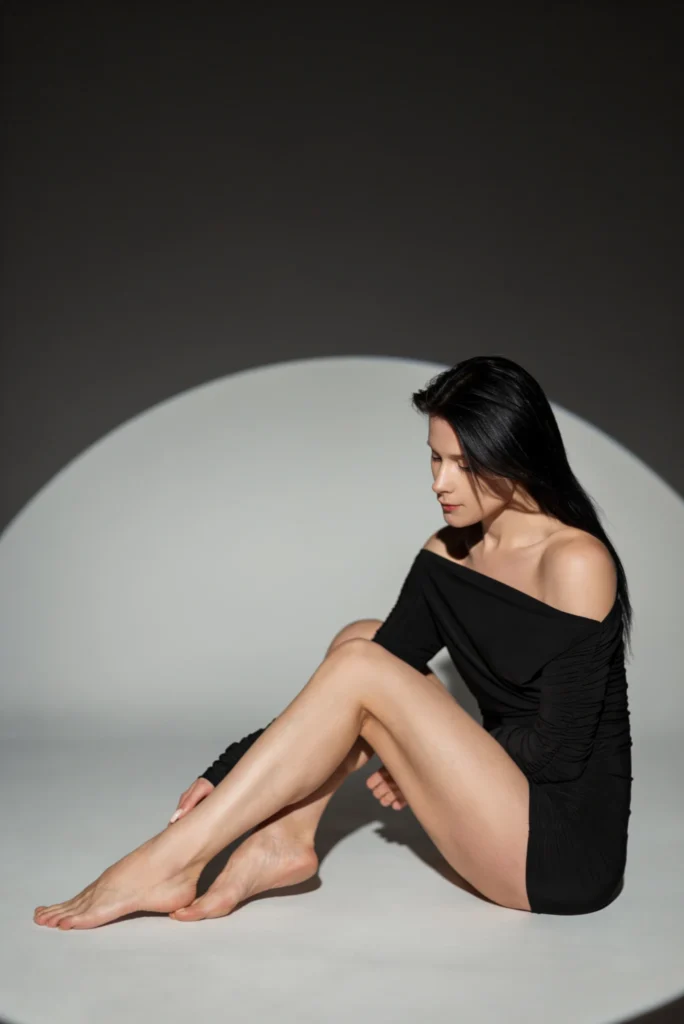
Can J Plasma Thigh Lift Fix Mild to Moderate Thigh Sagging?
At a glance: J Plasma Thigh Lift
|
If you have noticed your inner thighs feeling looser or your skin looking less firm than it used to, you are not alone.
This is one of the most common cosmetic concerns among adults in their 30s, 40s, and 50s, and it can affect your confidence even when you feel healthy and strong. The good news is that you do not necessarily need a traditional thigh lift with long incisions to see real improvement.
J Plasma thigh lift is a minimally invasive option that is gaining popularity across Dubai, the UAE, and the wider Middle East for exactly this reason. It targets mild to moderate skin laxity using plasma energy delivered just beneath the skin, with minimal scarring and a manageable recovery.
In this blog, we’ll explain how a J Plasma thigh lift works, who is most likely to benefit from it, what results you can realistically expect, how it compares with treatments such as BodyTite, and what recovery typically involves.
How does J Plasma work on thighs?
J Plasma (also known as Renuvion) uses a combination of helium gas and radiofrequency energy to generate a precise stream of cold plasma. This plasma is delivered through a small cannula placed just below the surface of the skin.
As it passes through the subdermal layer, it causes the tissue to contract almost immediately and then stimulates ongoing collagen production in the weeks that follow.
For patients with mild to moderate thigh laxity, this can help improve firmness and contour without the long scars associated with a traditional thigh lift. The treatment is particularly effective for areas such as the inner thighs, where loose skin often develops with age or weight changes.
Results continue to improve over several months as new collagen forms, creating smoother, tighter-looking skin. J Plasma can also be used on other areas of the body and may be combined with liposuction or other body contouring procedures when appropriate.
Is J Plasma right for mild to moderate sagging?
The best candidates for J Plasma typically have mild to moderate skin laxity. This means your skin has become loose but still retains some elasticity.
You may be a good candidate if:
- You have mild loose skin on the inner or outer thighs.
- You are close to your ideal weight and maintaining it.
- You are in generally good health.
- You want tighter skin without the scars of a traditional thigh lift
- You have realistic expectations about improvement.
J Plasma is often effective when the skin appears crepey, mildly wrinkled, or slightly droopy. However, it is not designed to remove large amounts of excess skin.
For individuals with significant loose or hanging skin, particularly after major weight loss, a traditional thigh lift may deliver a more noticeable result. A consultation with an experienced plastic surgeon is the best way to determine the most suitable treatment option, including whether non-surgical skin tightening treatments like Morpheus8 or J Plasma are the right fit for your skin.
Who should avoid J Plasma thigh lift?
In the first few weeks after treatment, you will see some initial tightening. However, the full effect takes time. Collagen remodelling is a gradual process, and most patients see their best results between three and six months post-procedure. The skin continues to improve even after you feel fully recovered.
For reference, J Plasma arms before and after photos shows a similar pattern: an initial improvement, followed by a more pronounced result several months later. The thighs follow the same timeline. Expect swelling and some firmness in the treated area during the first few weeks; this is part of the healing process, not a sign that something is wrong.
J Plasma thigh lift results can last for many years, particularly when supported by a stable weight and healthy lifestyle. While the skin will continue to age naturally over time, most patients enjoy long-term improvements in skin tightness and contour.
Recovery timeline: Day by day
Understanding your recovery steps helps you plan your work schedule and personal life around your healing.
Timeframe | What to expect |
Day 1-2 | Mild soreness and fluid drainage from the tiny punctures. You will need plenty of rest and should wear your medical compression garment continuously. |
Day 3-5 | Swelling and bruising peak during this window. You can move around your home gently to keep your blood flowing well. |
Week 1-2 | Soreness drops significantly. Most patients can return to standard office work and light, daily walks. |
Week 3-4 | Bruising fades away and swelling decreases. You will begin noticing the initial skin tightening changes taking shape. |
Month 2-3 | You no longer need to wear the compression garment. Residual swelling disappears, revealing cleaner leg contours. |
Month 4-6 | The final outcomes become apparent as deep collagen production completes its natural cycle. |

Recovery tips & best practices
- Wear your compression garment as instructed. It reduces swelling and supports the skin as it heals.
- Keep the treated leg elevated when resting to help fluid drain.
- Wear loose, breathable clothing to minimise irritation.
- Stay well hydrated to support recovery.
- Take short walks within the first 24-48 hours, as advised by your surgeon.
- Avoid baths, hot tubs, and swimming pools for at least four weeks.
- Do not return to intense exercise until your surgeon clears you (usually around weeks 4-6).
J Plasma side effects: What you should know?
Like any cosmetic procedure, J Plasma thigh lift carries some risk. Understanding the J Plasma side effects before you proceed is an important part of making an informed decision.
Common side effects:
- Swelling, typically peaks in the first 3-5 days and gradually resolves over 2-4 weeks, see our post-surgery recovery guidelines for advice on managing swelling and bruising effectively.
- Bruising, common in the treated area; fades within 2-3 weeks.
- Tenderness and soreness as the tissue heals.
- Numbness or altered sensation, usually temporary; resolves over several weeks.
- Firmness or tightness under the skin.
These risks are manageable and can often be minimised by choosing an experienced, board-certified plastic surgeon who regularly performs J Plasma procedures.
BodyTite vs J Plasma: Which is better for thighs?
Both BodyTite and J Plasma are minimally invasive skin-tightening technologies, and both are used on the thighs. Here is how they compare:
Feature | J Plasma | BodyTite |
Technology | Plasma + radiofrequency | Helium plasma with radiofrequency energy |
Skin tightening strength | High; causes immediate deep tissue shrinkage | Moderate to high; heats tissue uniformly |
Best for | Mild to moderate skin laxity | Fat reduction with skin tightening |
Recovery | Relatively short recovery | Similar recovery period |
Fat removal option | Often combined with liposuction | Built-in fat reduction capability |
Collagen stimulation | Excellent; long-term cellular renewal over 6 months | Very good; continuous remodeling over several months |
While both systems provide excellent outcomes, the ideal choice depends on your specific skin thickness, fat distribution, and physical anatomy. Your surgeon will recommend the best path forward after a comprehensive examination.
Dr. Omar Fouda Neel’s approach & technique
Achieving beautiful, natural outcomes requires a balance of medical expertise and artistic skill.
Dr. Omar Fouda Neel, a board-certified plastic surgeon practicing in Dubai, approaches each body contouring procedure with a personalized plan tailored to your unique anatomy. He does not believe in a one-size-fits-all strategy for cosmetic care.
During your initial assessment, Dr. Omar Fouda Neel maps out the exact energy levels needed for different zones of your legs. He focuses heavily on the J Plasma inner thighs, where the skin is naturally thin and prone to sagging.
If you have stubborn pockets of stubborn fat alongside loose skin, he can combine this treatment with gentle liposuction to remove fat and tighten the skin at the same time.
Why choose Dr. Omar Fouda for J Plasma thigh lift?
Choosing the right surgeon is one of the most important decisions you’ll make when considering a J Plasma thigh lift.
Dr. Omar Fouda Neel is a board-certified plastic surgeon in Dubai who focuses on individualized treatment planning, patient education, and realistic expectations. Rather than applying a one-size-fits-all approach, he carefully evaluates your anatomy, concerns and goals to recommend the most appropriate treatment.
For patients throughout Dubai, the UAE, Saudi Arabia, and the wider Middle East, his commitment to safety and natural-looking outcomes makes him a trusted choice for body contouring procedures.
Related Post






FAQs
A J Plasma thigh lift is a minimally invasive skin-tightening procedure that uses helium plasma energy beneath the skin. The treatment causes immediate tissue contraction and stimulates collagen production. Over time, the skin becomes firmer and smoother.
Results can be long-lasting when you maintain a stable weight and healthy lifestyle. Natural aging will continue, but the tightening achieved through collagen remodeling can remain visible for years.
Yes. J Plasma can be used on both the inner and outer thighs. Many patients specifically seek treatment for loose skin on the inner thighs because this area commonly develops laxity with age.
Some tightening can be seen early, but final results take time. Most patients continue to see improvement for several months as collagen develops, with results becoming clearer around the six-month mark.
Yes. J Plasma legs treatment can improve mild to moderate skin laxity by tightening tissue beneath the skin and stimulating collagen production. Patients with severe excess skin may need a surgical procedure instead.
A J Plasma BBL combines skin tightening with a Brazilian Butt Lift. It can help improve skin firmness in areas where fat is removed, creating smoother and more refined body contours.
Yes. J Plasma abdomen treatment can help tighten mild to moderate loose skin on the stomach. While some tightening is seen immediately, the full result develops gradually over the following months as collagen production increases.